Celebrate Everything and Everyone
We have arrived at the fourteenth lesson.
And I want to begin it the way I want you to begin every day for the rest of your life.
With celebration.
Not because everything is perfect. Not because life has delivered everything you asked for. Not because the hard things have resolved, the difficult people have changed, or the uncertain future has revealed itself to be safe.
But because you are here.
Because this moment — this ordinary, unremarkable, easily overlooked moment — is the only place where your life is actually happening.
And that alone is worth celebrating.
The Life We Were Taught to Live
Most of us were given a very specific set of instructions about when celebration was appropriate.
Celebrate the graduation. Celebrate the promotion. Celebrate the wedding, the new home, the milestone achievement. Celebrate when something significant happens — something that can be pointed to, announced, justified as worthy of joy.
The rest of the time? Get on with it. Keep moving. There will be time to enjoy life later, once things settle down, once you’ve arrived wherever it is you are supposed to be going.
And so we wait.
We put our full capacity for joy on hold — pending arrival at a destination that keeps moving further away. Pending resolution of problems that resolve and are replaced by new ones. Pending the version of life that finally feels stable enough, successful enough, certain enough to deserve the full weight of our gratitude.
And life passes.
Not between the moments of celebration. As the moments of celebration — uncelebrated.
The Monday morning. The coffee going cold on your desk. The commute you take every day without once noticing the sky. The conversation with someone you love so familiar that you stopped hearing it years ago.
These are not the fillers between your real life. These are your real life. All of it. Every ordinary, unglamorous, unremarkable piece of it.
And it is going by.
What Celebration Actually Is
I want to separate celebration from performance.
Because most people, when they hear the word celebrate, think of something visible. Something announced. Something done for an audience.
That is not what I am describing.
The celebration I am describing is an interior act. A quality of attention. A decision — made quietly, privately, without fanfare — to be genuinely present for what is actually here.
It is the choice to taste your food instead of eating it while scrolling.
It is the choice to look at the sky on the way from your car to your door, rather than looking at your phone.
It is the choice to actually listen when the person you love is telling you something — not listen while composing your response, not listen while checking whether this is going somewhere, but actually listen. With your whole self. Like it matters.
Celebration, in this sense, is not something you do on special occasions. It is the practice of meeting ordinary occasions with the quality of attention that special occasions demand.
The Neuroscience of Noticing
Here is what neuroscience tells us about the brain of someone who practices this kind of celebration.
The human brain has a bias toward threat. It was designed, over millions of years of evolution, to notice what is wrong — what is dangerous, what is missing, what could go badly — and to give those things priority. This was essential for survival. It kept our ancestors alive.
But it makes for an impoverished experience of life in a world that is no longer primarily threatening.
Because the negative bias means that the brain, left to its own devices, will consistently filter out the good, the beautiful, the ordinary miraculous — and amplify the difficult, the worrying, the unsatisfying.
Unless you deliberately intervene.
And celebration is exactly this kind of deliberate intervention.
When you pause to genuinely notice something beautiful — when you let a moment of loveliness actually land, actually register, actually be felt — you are interrupting the default filter. You are training your brain, through repetition, to notice what is good.
And the brain that has been trained to notice good finds more good. Not because more good arrived. Because the filter changed.
You do not experience a richer life by having more. You experience a richer life by noticing more of what is already here.
The Kabbalah of Appreciation
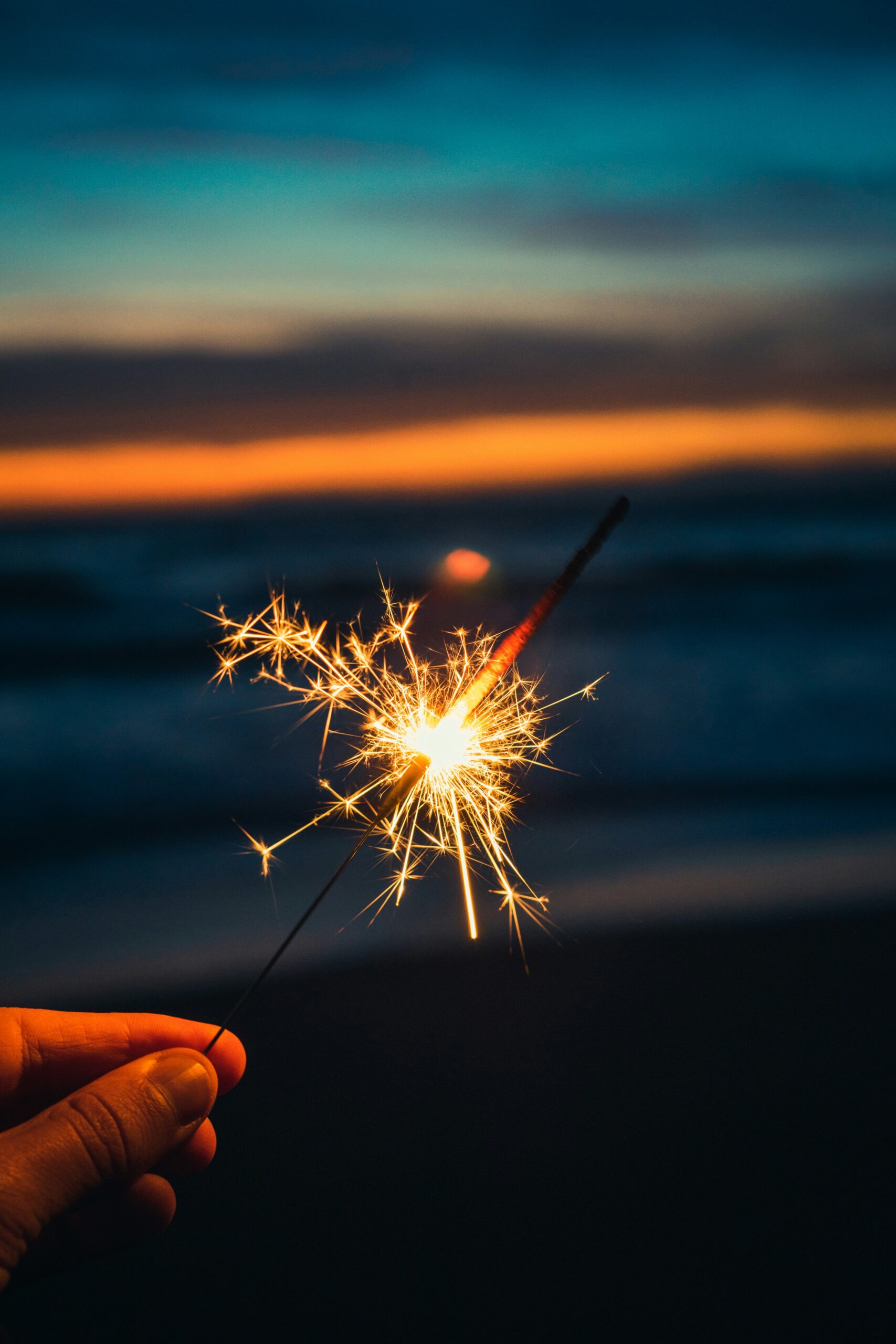
The Kabbalists teach that every moment contains a spark of Divine Light — Nitzotzot — hidden within it. These sparks exist within everything: within objects, within events, within even the most ordinary experiences of daily life.
The purpose of human consciousness, in this framework, is to elevate these sparks. To recognize them. To acknowledge the Divine Light hidden within the ordinary.
And the act of genuine appreciation — of truly noticing and being moved by the beauty hidden in a moment — is precisely this elevation.
When you pause to genuinely appreciate a sunset, you are not just having a pleasant experience. You are, in the Kabbalistic framework, performing a sacred act. You are recognizing the Divine Light within that moment. You are elevating a spark that was waiting to be seen.
Every genuine moment of appreciation is an act of spiritual participation in the universe’s unfolding.
This is why conscious people seem to live in a richer world than the rest. Not because their circumstances are better. Because their eyes are open to what most people walk past without seeing.
The sparks are everywhere. In the steam rising from a morning cup of tea. In the sound of rain on a window. In the face of someone who loves you, grown so familiar that you almost forgot to look at it.
They were always there.
Waiting to be seen.
Paulo Coelho’s The Alchemist is perhaps the most beautiful story ever written about finding the extraordinary hidden within the ordinary — a perfect companion to this lesson.
What Is Worth Celebrating
Everything.
And I mean that with precise literalness.
Celebrate the rain. Not just when it is dramatic and cinematic and you are inside looking out from somewhere warm. On ordinary Tuesdays when it is inconvenient and your shoes get wet and the traffic backs up. The rain that fell before you were born and will fall after you are gone. That has been falling on this earth for longer than humans have existed to be annoyed by it.
Celebrate Mondays. Not as a performance of positivity. But as the genuine recognition that a new week beginning is not a burden but an invitation. Seven more days of this strange, brief, irreplaceable experience of being alive.
Celebrate good coffee. The specific pleasure of a hot drink on a cold morning. The pause it creates in an otherwise relentless day. The fact that somewhere on earth, someone grew something, harvested it, roasted it, shipped it across oceans — so that you could have this particular moment of warmth in your hands.
Celebrate the people who love you. Not in the abstract. Specifically. The way your mother asks if you have eaten. The way a friend texts you something they saw that made them think of you. The way the person you love most is just — there, in the same room, part of the furniture of your life so familiar you almost forgot that familiarity is its own miracle.
Celebrate strangers. The driver who let you in. The shop assistant who smiled with their eyes. The person reading a book on the train who reminded you that there are still people who read books on trains. Human beings, in their ordinary going about of their lives, are remarkable. We forget this. But they are.
Celebrate different cultures. The food you tasted once from somewhere you have never been and thought — this is extraordinary. The music from a tradition not your own that reached something in you anyway. The ceremony, the ritual, the way another people has found to mark the passage of time and honor what is sacred. The world is richer for its diversity. Celebrate that.
Celebrate the pain that taught you something. Not immediately. Not while it is still acute. But later — when enough time has passed that you can see the shape of what it gave you. The loss that deepened your compassion. The failure that redirected you somewhere better. The heartbreak that taught you what love actually is. These deserve acknowledgment too.
Celebrate your parents. However complicated the relationship, however much is unresolved — the fact that they gave you life, that they tried in whatever way they were capable of trying, that they were there in the ordinary and unwitnessed ways that parents are there. These deserve a moment of acknowledgment before it is too late to give it.
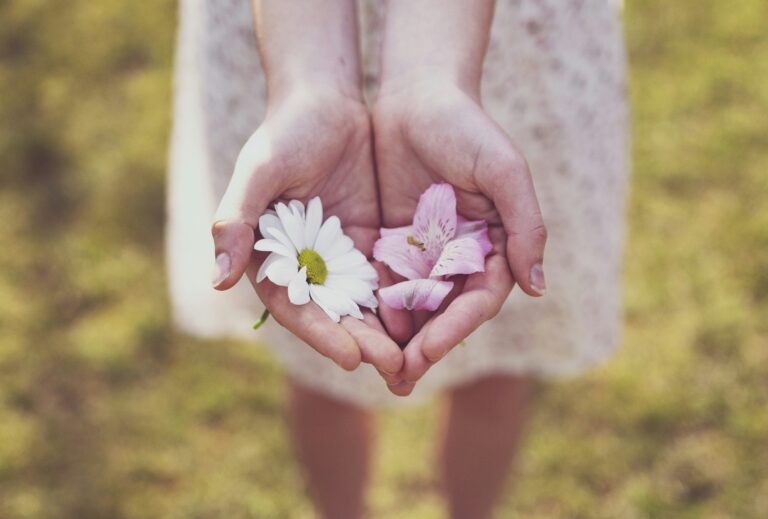
Celebrate your own existence. The particular constellation of experiences, perceptions, loves, wounds, humor, and ways of seeing the world that constitute you and no one else. You are an occurrence that has never happened before in the history of the universe and will never happen again. That is not a small thing. That is the most singular, irreplaceable, astonishing fact about your life.
The Paradox of Celebration
Here is something I have observed, and that every tradition of conscious living seems to confirm.
The more genuinely you celebrate what you have, the more arrives.
Not as a magic formula. Not as a trick for attracting abundance.
As a natural consequence of the consciousness that celebration cultivates.
The person who has trained themselves to notice beauty becomes someone who sees more beauty — because the filter changed. The person who is genuinely grateful for what they have becomes someone who uses what they have more fully — and therefore experiences more of its potential.
And the person who approaches life as a continuous celebration — who meets Monday mornings and rainy Tuesdays and ordinary conversations with the same quality of appreciative attention they bring to peak experiences — discovers something astonishing.
That peak experiences were never the exception. They were always available. They were simply waiting for the quality of attention that celebration brings.
The universe has always been lavishly, extravagantly, incomprehensibly generous.
Most of us were just too busy looking elsewhere to notice.
How To Actually Celebrate Everything
1. The morning pause.
Before the day begins — before the phone, before the news, before the agenda of everything that needs to be done — take sixty seconds. Look at where you are. Feel that you are breathing. Notice one thing that is good about this specific morning. Name it quietly to yourself. Begin from there.
2. The sensory arrival.
Once a day, choose one ordinary sensory experience and be completely present for it. Your morning drink. A meal. A shower. A walk. Drop the thinking, the planning, the background noise of your mind — and just be in the sensation. Taste what you are tasting. Feel what you are feeling. Arrive in your own body in the middle of your ordinary life.
3. The daily acknowledgment.
Each evening, name three things that happened today that were worth appreciating. Not the big things necessarily. The small ones. The conversation that was better than expected. The moment when the light came through the window at a particular angle. The thing that made you laugh. Accumulate these daily. Watch what happens to your perception of your life over months.
4. The seen person practice.
Once a day, genuinely see someone. Not look at them. See them. Acknowledge something real about their presence — their effort, their kindness, their humor, their humanity. Do this without agenda. Simply because they deserve to be seen, and so do you, and the world is better when people see each other.
5. The celebration of difficulty.
When something hard arrives — not immediately, but when you have enough distance to look at it — ask what it is offering. What is it teaching? What is it clarifying? What door is it closing so that another might open? This is not toxic positivity. It is the practice of looking for the light that difficulty almost always, eventually, carries within it.
6. The annual ritual.
Once a year — on your birthday, at the new year, on any day that feels like a threshold — sit down and write a letter to your life. Not to yourself. To your life. Thank it for what it has given you. Acknowledge what it has taken. Note what you have learned. Celebrate the fact that you are still here, still moving, still becoming whoever it is you are in the process of becoming.
The Philosophy Behind the Practice
I want to close this lesson with something I believe with my whole self.
The purpose of consciousness is not to escape life.
It is to be fully present for it.
All the lessons in this book — the Vortex, the Transitional Reality, the Emotional Mastery, the Flow State, the Open Heart, the Sacred Romance — all of them were pointing toward this.
Not toward a state so elevated that ordinary life becomes irrelevant. Toward a quality of presence so complete that ordinary life becomes the very site of the sacred.
The rain on a Tuesday. The coffee going cold. The face of someone who loves you. The stranger who smiled.
These are not interruptions to your spiritual life. They are your spiritual life.
And a spiritual life that cannot find the sacred in a Monday morning is, I would gently suggest, still looking in the wrong direction.
The mystics who spent years in prayer and meditation and rigorous practice — what were they cultivating? The capacity to be present. To perceive. To appreciate. To encounter the ordinary with eyes awake enough to see what is actually there.
They were, in the deepest sense, learning to celebrate.
The Architecture Continues
We began this journey with the Vortex — the recognition that your inner state is the most important thing you can tend to. That alignment comes first, and everything else flows from it.
We moved through the landscape of consciousness — learning to distinguish the Transitional Reality from the Dream Reality. Learning to master our emotions rather than be mastered by them. Learning that the body is a doorway, not an obstacle.
We discovered that observation shapes reality. That spiritual advancement looks like love, not knowledge. That beliefs are decisions, and decisions can be remade. That love is not something to seek but something to become.
We found the flow state — and then learned to live from it. We opened the heart and discovered what becomes possible when we stop defending ourselves against life. We learned to give rather than take. We fell into Sacred Romance with the Divine.
And now, here — we arrive at the simplest and perhaps the most profound lesson of all.
Celebrate it.
Celebrate all of it. The extraordinary and the ordinary. The peaks and the Tuesdays. The people who stayed and the ones who left and the strangers whose names you will never know. The pain that taught you and the joy that surprised you and the quiet grace of ordinary days that felt unremarkable and were, in fact, everything.
Celebrate the fact that you read this far. That something in you was searching for something like this. That you are the kind of person who cares enough about consciousness, about growth, about the quality of your interior life, to spend time with these ideas.
That is not nothing. That is, in fact, quite extraordinary.
This is not the end.
It is the beginning of a life lived more awake.
Go celebrate it.
This is Lesson 14 of The Architecture of Conscious Living — a philosophy where ancient wisdom meets the science of consciousness. If this journey has moved you, you’re exactly where you belong. [Subscribe below] for what comes next.